

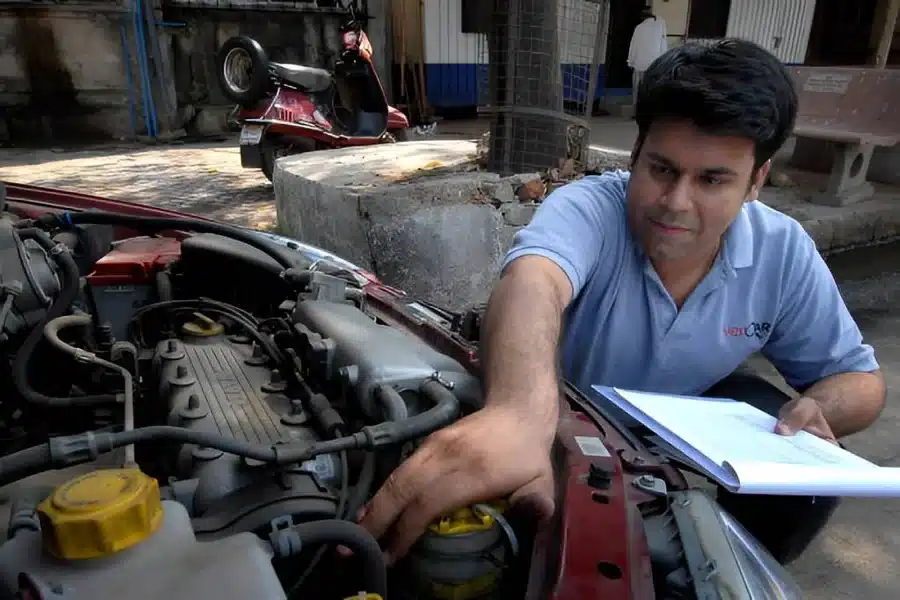
Most people walk up to a used car, look at the color, sit in the seat, and decide they like it.
That’s exactly how buyers end up with expensive problems they didn’t see coming. If you’re shopping for a second-hand car in Sharjah, inspecting it the right way separates a smart buy from a costly regret.
This guide walks you through a professional-level inspection process so you know exactly what you’re buying before any money changes hands.
Bring the Right Tools and You’ll Already Be Ahead
Show up prepared, and sellers will take you seriously. More importantly, you’ll catch things most buyers completely miss.
Bring a high-lumen flashlight to check seams, the undercarriage, and inside wheel wells.
Pack an OBD-II scanner to pull engine codes, including ones that were recently cleared. Carry paper towels for checking fluid condition on dipsticks. A simple fridge magnet works as a body filler detector since body filler used to hide past repairs won’t attract a magnet the way real metal does.
Download a VIN-decoding app on your phone to check recall history and service records on the spot.
Arriving with these tools sends a clear message. You’re not an easy target, and you’re going to check everything.
Always Arrive Early So the Engine Is Cold
This one detail matters more than most buyers realize.
Arrive at least 15 minutes before your scheduled time so the engine hasn’t been warmed up. A cold start reveals problems a warmed engine can hide, including rough idling, timing issues, and smoke that disappears once the engine reaches normal temperature.
While you wait, start your exterior check.
Run your magnet slowly across every panel, the hood, doors, A-pillars, and quarter panels. It should stick consistently across all surfaces. If it slides or loses strength in a patch, that area has been filled with body filler, which means a past collision was repaired and not disclosed.
Also look for mismatched paint, uneven panel gaps, or any section of bodywork that looks slightly different in texture or finish from the rest.
Check the tires while you’re outside. Look at the sidewall for a four-digit date code. The last two digits are the year of manufacture. Tires older than six years are unsafe regardless of tread depth.
Uneven wear across the tread points to alignment or suspension problems that will cost money to fix.
Go Deep Under the Hood Before You Listen to Anything the Seller Says
Pop the hood and check everything yourself.
Pull the oil dipstick, wipe it clean, reinsert it, and pull it again. The oil should be amber to dark brown. If it looks milky, grey, or foamy, there’s coolant mixing with the oil, which points to head gasket failure. That’s a repair that can run into thousands.
Check the coolant reservoir when the engine is cold. The fluid should be clean and colored, typically green, orange, or pink. Brown sludge or oily residue in the coolant means serious engine or cooling system trouble.
Look along the engine block and underneath for any wet patches or dried leak trails.
Plug in your OBD-II scanner and check for active fault codes, pending codes that haven’t triggered the check engine light yet, and readiness monitors. If several monitors show “not ready,” the codes were likely cleared recently to hide recurring problems.
That’s a deliberate attempt to mask issues, and it’s reason enough to walk away.
Stress Test the Interior Before You Even Start the Car
Sit inside and test everything at once.
Open and close all windows simultaneously. If the engine strains or the belts squeal under that electrical load, the alternator or belt system may be struggling. Set the AC to maximum cold and confirm it cools down quickly.
Run the heat and check that it responds fast. Work through every button, all steering wheel controls, the infotainment system, and any driver-assistance features.
Then stop and smell the interior. A musty or damp odor is one of the most reliable signs of flood damage, even in a car that looks completely dry. Check under the floor mats and in the boot for moisture or staining.
Flood-damaged cars can pass a visual check but create electrical nightmares for years afterward.
Drive It Hard Enough to Find the Real Problems
A gentle loop around the block tells you almost nothing. Use a three-surface approach on your test drive.
At low speed, make sharp turns in both directions and listen for clicking or clunking from the front axle. That sound points to failing CV joints, a repair that typically runs $500 to $1,000.
On a highway ramp or incline, accelerate from 40 to 70 mph and watch how the transmission handles it. Shifts should be smooth and immediate, with no hesitation or harsh engagement. At around 60 mph, ease off the gas and feel for any shimmy or vibration. Steering wobble at highway speed usually means bent wheels, worn suspension, or unbalanced tires.
Finally, on a quiet flat road, drive at 30 to 40 mph, take your hands briefly off the wheel, and apply the brakes gently. If the car pulls to one side, there’s a brake or alignment issue that needs attention.
Turn Every Problem You Find Into Money Off the Price
Your inspection findings are negotiating tools. Old or bald tires justify $400 to $600 off. A minor oil seep is worth $300 to $400. Worn suspension components that clunk or bounce excessively can support a $400 to $800 reduction. CV joint noise, backed by what you heard on the test drive, is grounds for $500 to $1,000 off. If your OBD-II scanner shows recently cleared codes, use that as direct evidence of hidden issues and negotiate accordingly.
Come in with specific numbers tied to specific problems. Vague haggling rarely works. Documented findings almost always do.
How to Inspect a Second-Hand Car Like a Professional Buyer
immediate dealbreaker, even if the paintwork looks clean. Structural damage affects safety and can never be fully corrected.
Permanent or recurring check engine codes the seller can’t explain are another hard stop. So is any title discrepancy, including a salvage or rebuilt title that was never disclosed upfront.
A car that passes every check on this list is worth buying. One that fails the critical ones isn’t worth any amount of negotiation. Know the difference, and you’ll never overpay for someone else’s problem.
